Spatio-Temporal GNSS Interference Detection Using Multi-Receiver Monitoring
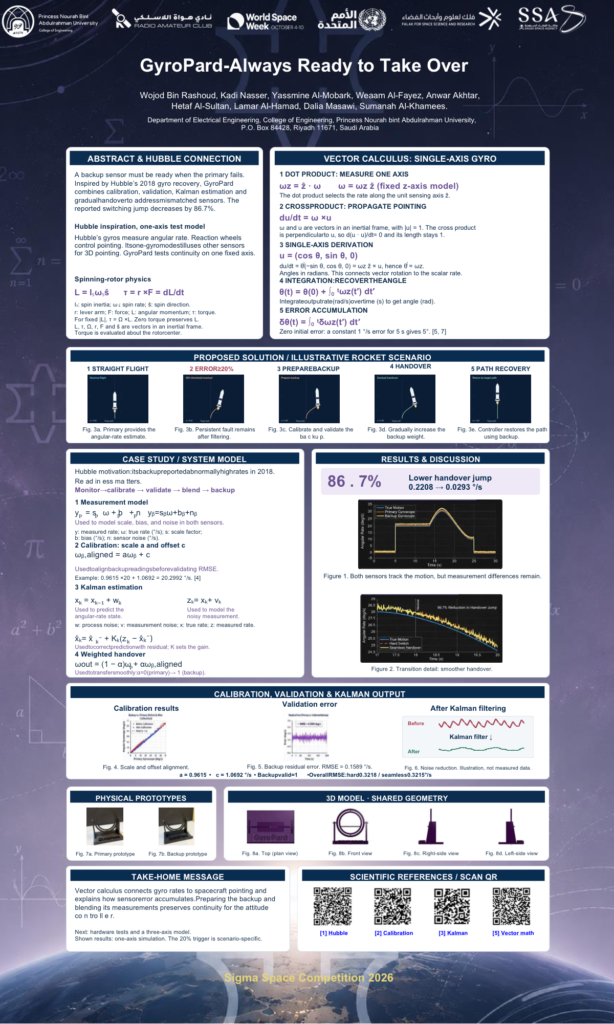
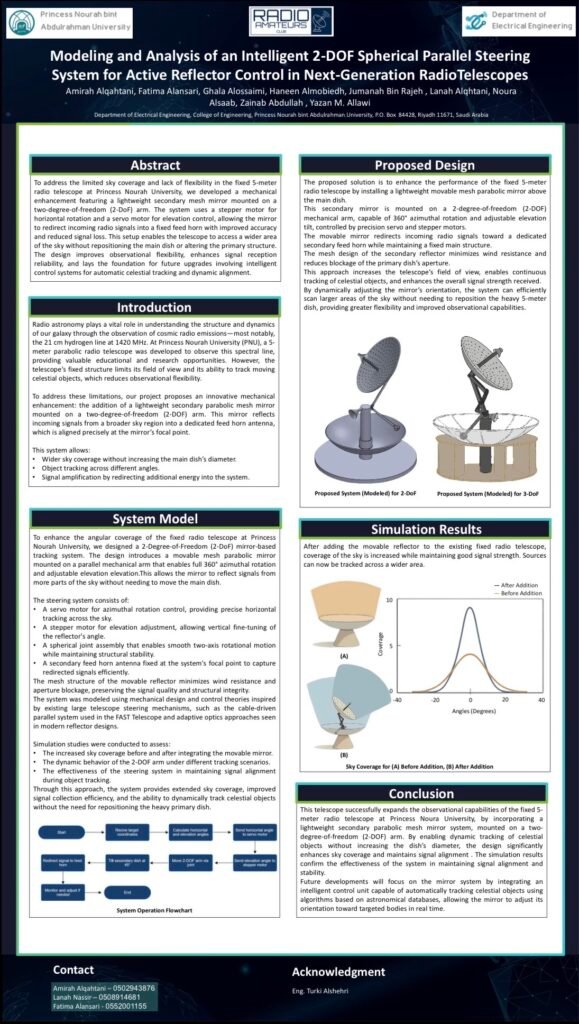
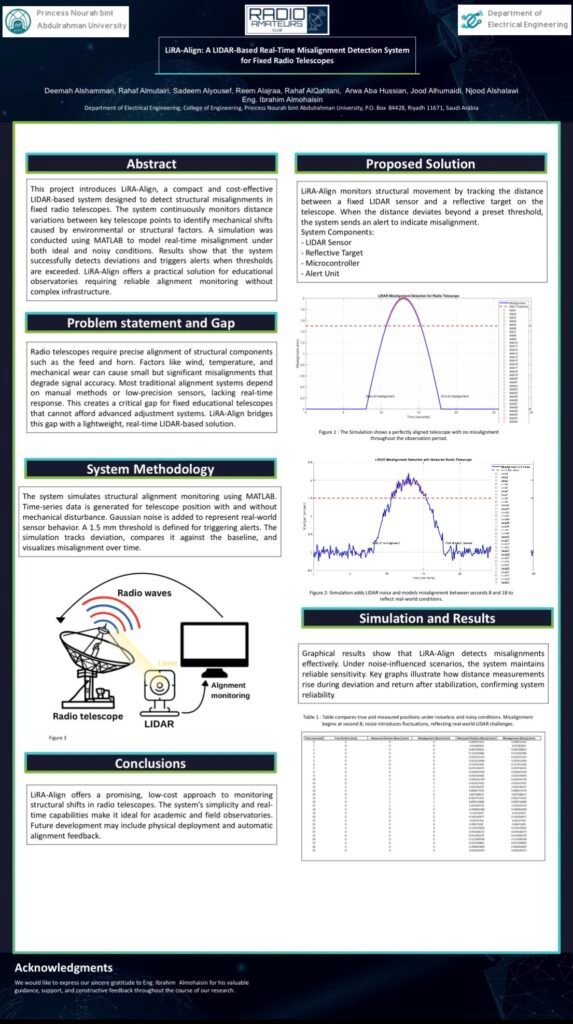
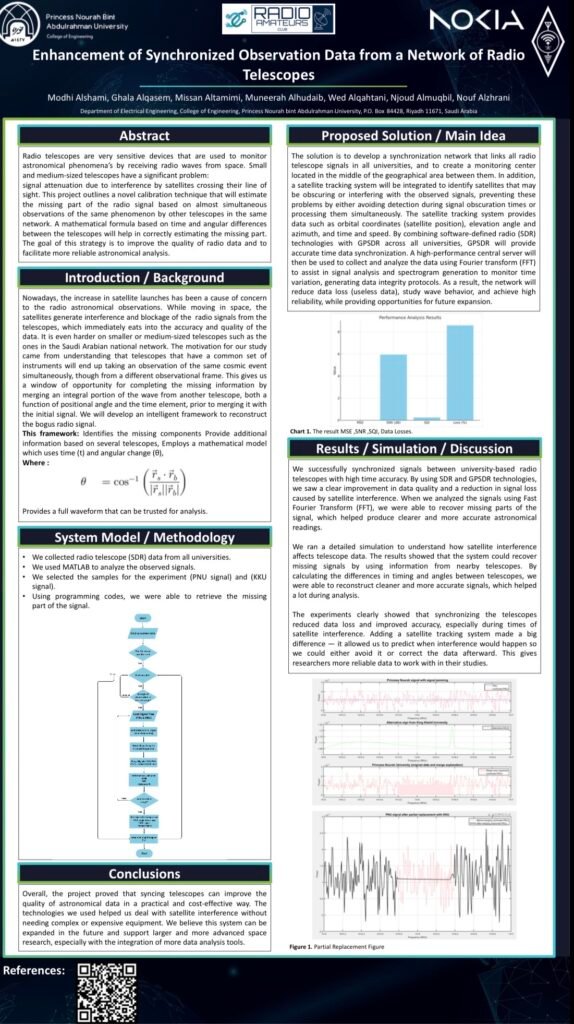
An intelligent GNSS interference detection system that uses multi-receiver monitoring and spatio-temporal signal analysis to detect jamming before complete navigation loss occurs.”
The system analyzes changes in signal quality using:
ΔC/N₀ = C/N₀(t) − C/N₀(t−1)
Large negative changes may indicate possible jamming or interference. The results show that combining temporal analysis using the Kalman Filter with spatial analysis and adaptive threshold optimization using Nelder-Mead improves interference detection and reduces false alarms.
Develop your technical skills
Discover Electrospace
Share your idea
Develop your project
Explore the world of wireless communications
Be part of the tech community
Project Idea
From an Idea to a Communication Experience
This project addresses the vulnerability of GNSS signals to jamming and electromagnetic interference, which can reduce positioning accuracy and system reliability.
The project proposes a multi-receiver monitoring approach based on C/N₀ analysis to detect interference and jamming events. A Kalman Filter is used for temporal signal monitoring, while the Nelder-Mead algorithm is used to optimize the detection threshold and reduce false alarms.
01
The Beginning
How Did the Idea Begin?
02
The Idea
What Does the Project Offer?
The project provides a distributed GNSS jamming-detection system based on two main layers:
* Kalman Filter: Smooths C/N₀ measurements and monitors signal behavior over time.
* Nelder-Mead Algorithm: Adaptively selects the optimal detection threshold across multiple receivers.
source localization through spatio-temporal analysis* Monitoring signals from multiple virtual receivers.
* Detecting abnormal changes in signal quality.
* Identifying jamming events and generating warning alerts.
* Supporting interferenc
e. Group_13 GNSS.pdf
The system was simulated using MATLAB, with four virtual GNSS receivers used to evaluate signal behavior under jamming conditions.
03
The Experience
From Concept to Prototype
Project Team
Hessah Alkhenin
Joud Almubdl
Aljur Aldosari
Reem Almoqbel
Razan Al Shureem
Layan Alanazi
Mudi Alharbi
Project Supervisor
Project Photo Gallery
A visual tour documenting the manufacturing stages, laboratory testing, and live tracking experiments in the field.
Other Projects in This Edition
Explore the projects and experiments that shape the Electrospace experience.