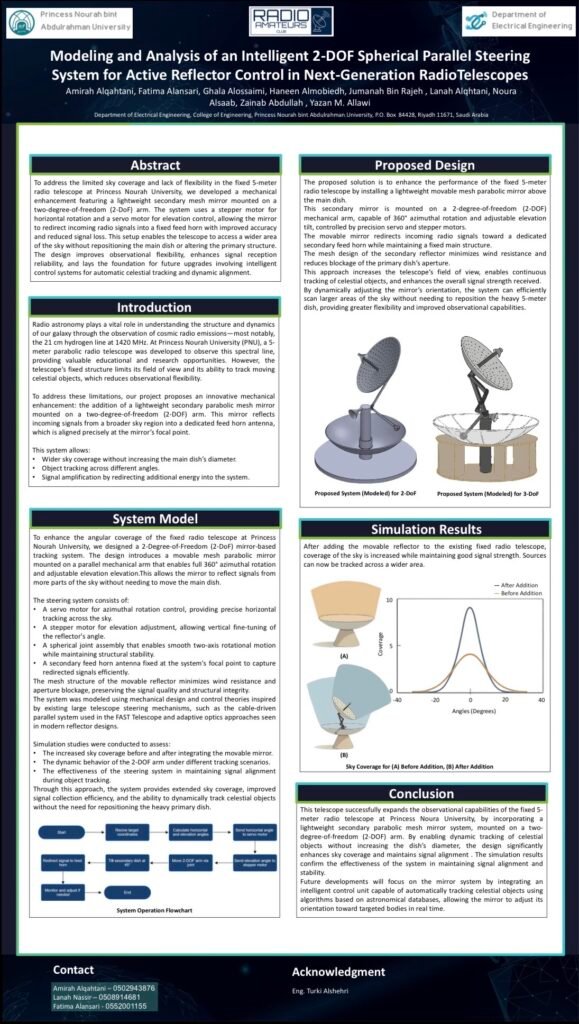
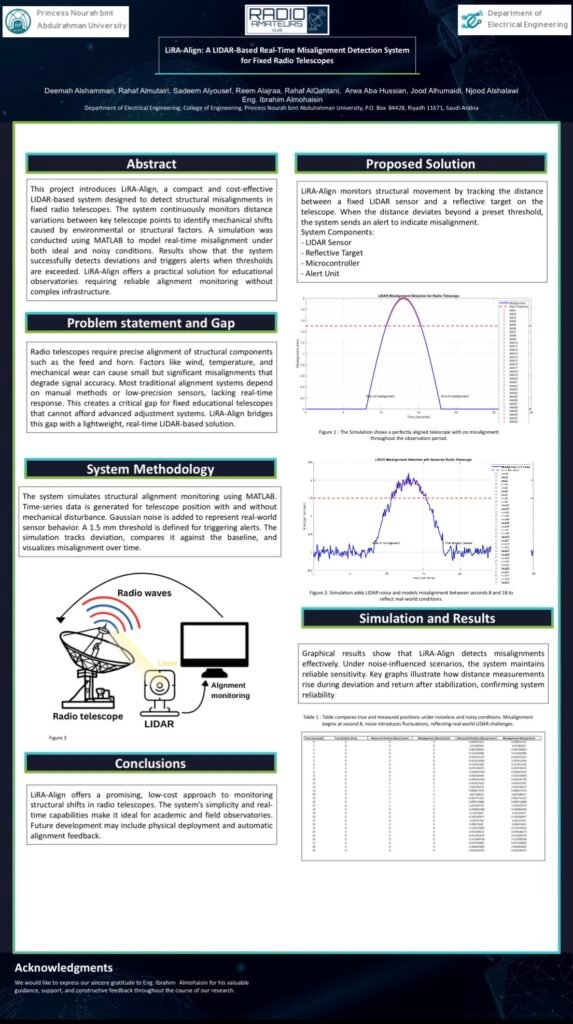
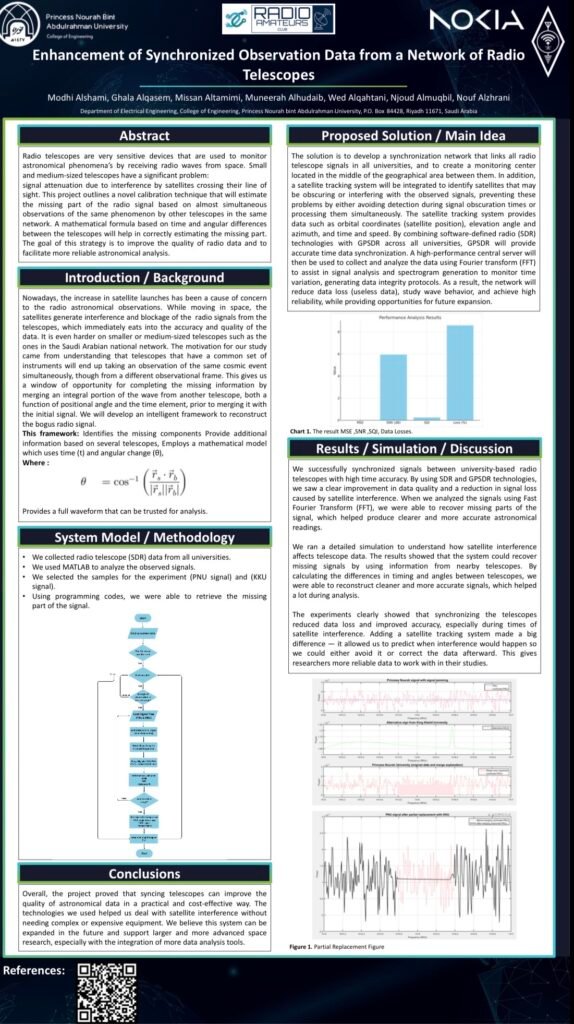
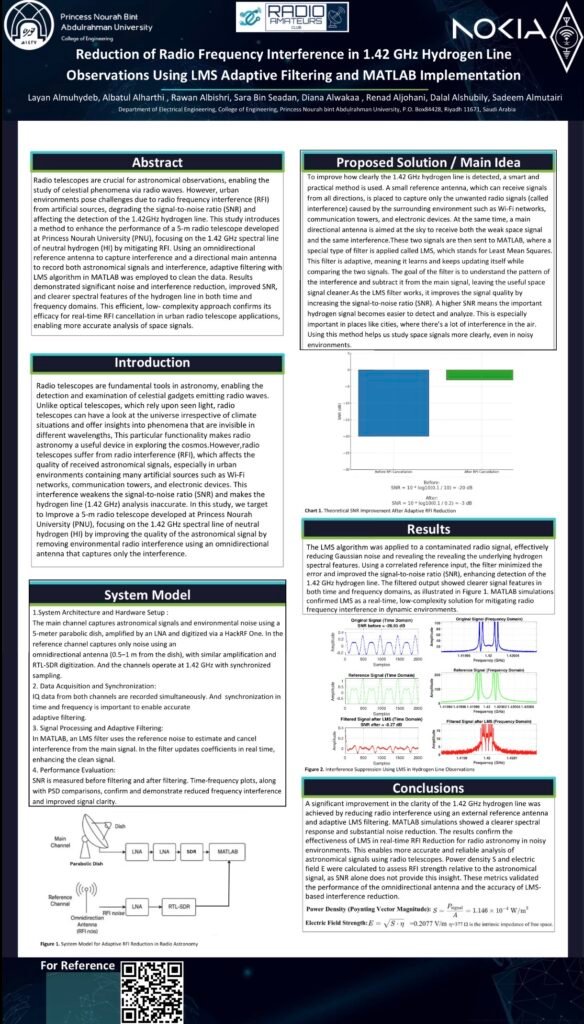
Smart Water-Cooling System for Thermal Noise Reduction in Radio Telescopes: Design and MATLAB-Based Simulation
Develop your technical skills
Discover Electrospace
Share your idea
Develop your project
Explore the world of wireless communications
Be part of the tech community
Project Idea
From an Idea to a Communication Experience
This project presents a smart water-cooling system designed to reduce thermal noise in radio telescopes, which can affect the accuracy of received signals, particularly in high-temperature environments. The system continuously monitors temperature and automatically controls the cooling process using two Arduino microcontrollers to maintain stable thermal conditions and improve radio-signal reception. The system’s thermal performance was also simulated using MATLAB to study its response.
01
The Beginning
How Did the Idea Begin?
The idea started from observing that increased temperature leads to higher thermal noise, which affects signal accuracy and the quality of data received by radio telescopes. Since traditional methods such as passive cooling and thermal insulation can be costly and complex, the team proposed a simple and low-cost water-cooling system using Arduino, where the temperature is continuously monitored and the cooling system is automatically activated when a specific temperature is reached.
02
The Idea
What Does the Project Offer?
The project provides a smart and low-cost temperature-control system for radio telescopes. An LM35 temperature sensor measures the temperature, and when it reaches 38°C, a signal is sent to a second Arduino to activate the water pump and cooling unit, while the cooling system turns off when the temperature decreases to 35°C. The system also uses PID control to regulate the cooling process gradually, maintain stable temperature conditions, and reduce thermal noise.
03
The Experience
From Concept to Prototype
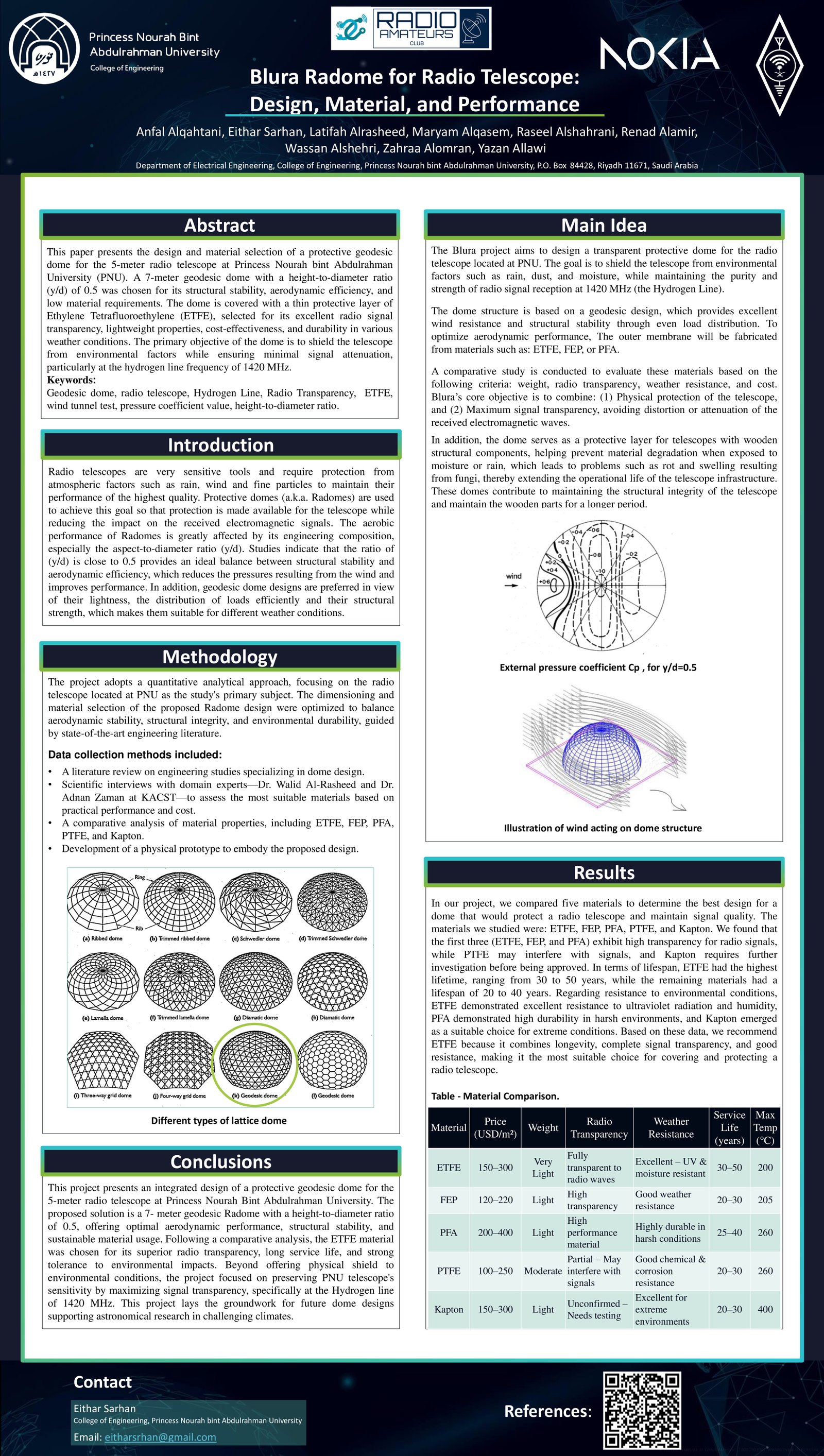
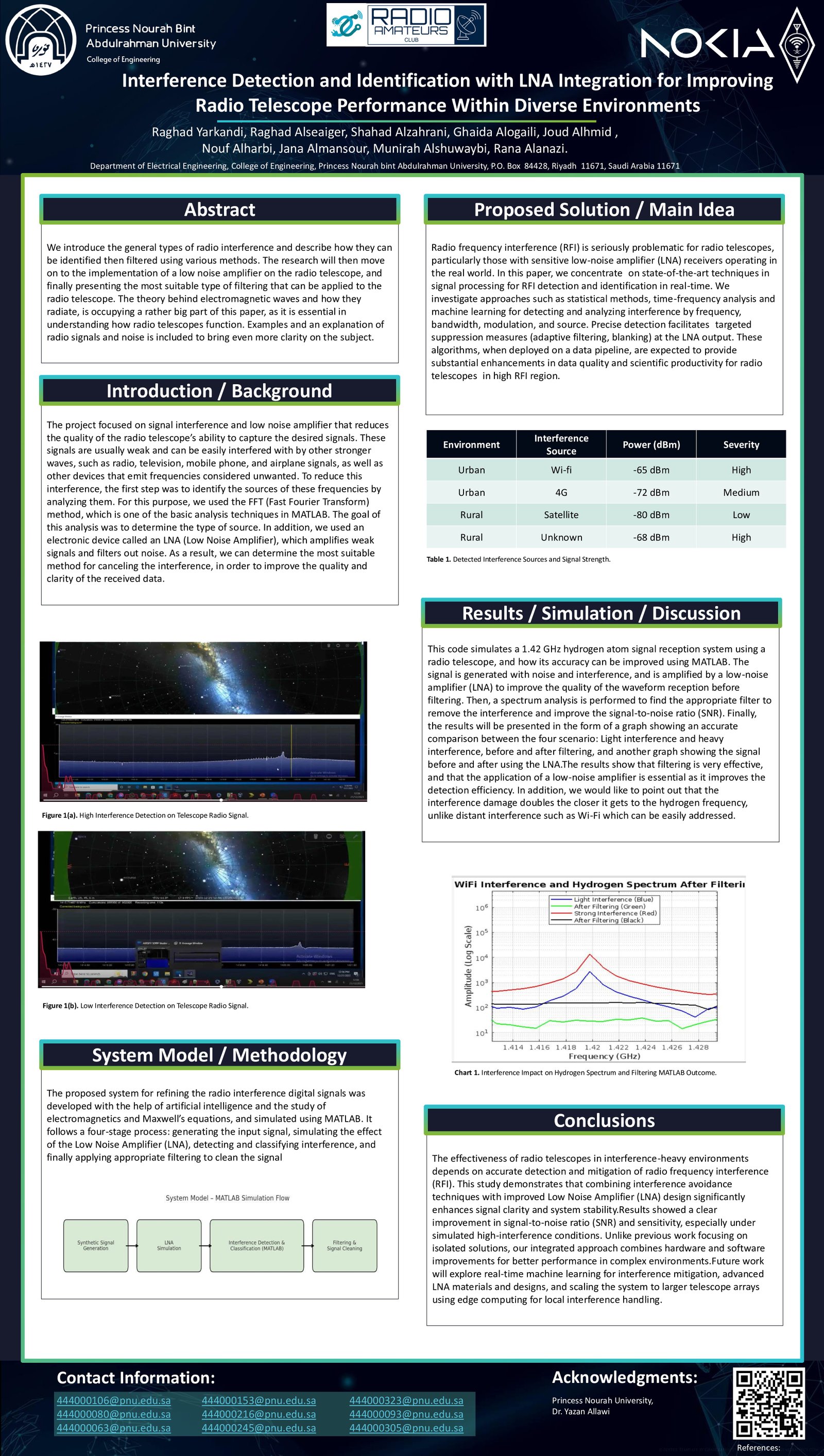
The concept developed from identifying the effect of thermal noise on telescope performance into a system consisting of two Arduino Uno microcontrollers, an LM35 temperature sensor, a submersible water pump, a DC motor, LED indicators, a water tank, and pipes. The thermal response was then simulated using MATLAB based on temperature data derived from a simulated 7.2-meter radio telescope, since actual radio-signal detection was not available during the simulation stage. The simulation successfully validated the cooling mechanism and its ability to control the thermal conditions.
Project Team
Taif Mahnashi
Joud Alotaibi
Leen Alghamdi
Layla Alsonani
Lina Alahmari
Raneem Alzuhair
Sireen Alqaznli
Leen Aljarbou
Project Supervisor
Project Photo Gallery
A visual tour documenting the manufacturing stages, laboratory testing, and live tracking experiments in the field.
Other Projects in This Edition
Explore the projects and experiments that shape the Electrospace experience.