Reduction of Radio Frequency Interference in 1.42 GHz Hydrogen Line Observations Using LMS Adaptive Filtering and MATLAB Implementation
Develop your technical skills
Discover Electrospace
Share your idea
Develop your project
Explore the world of wireless communications
Be part of the tech community
Project Idea
From an Idea to a Communication Experience
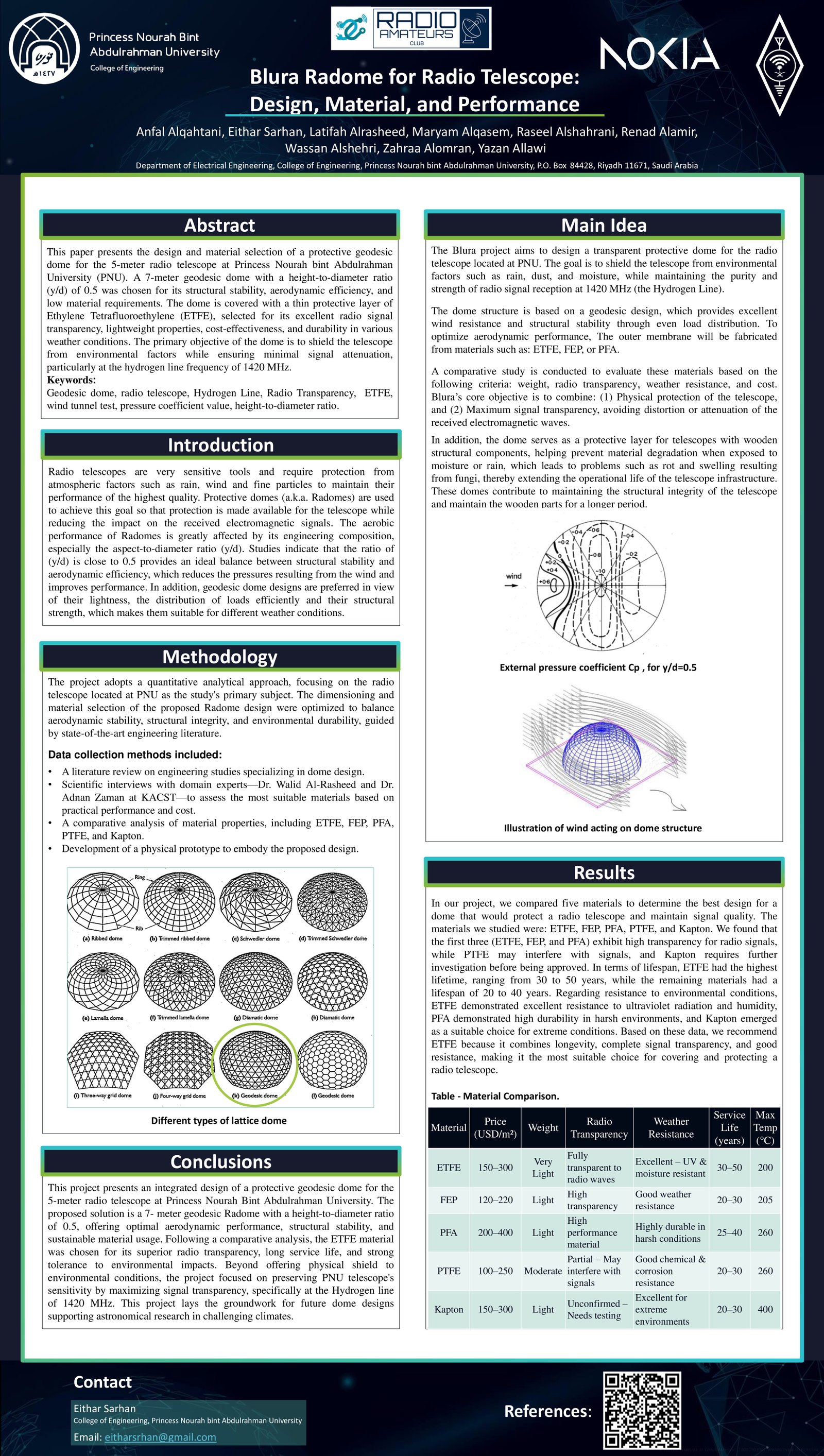
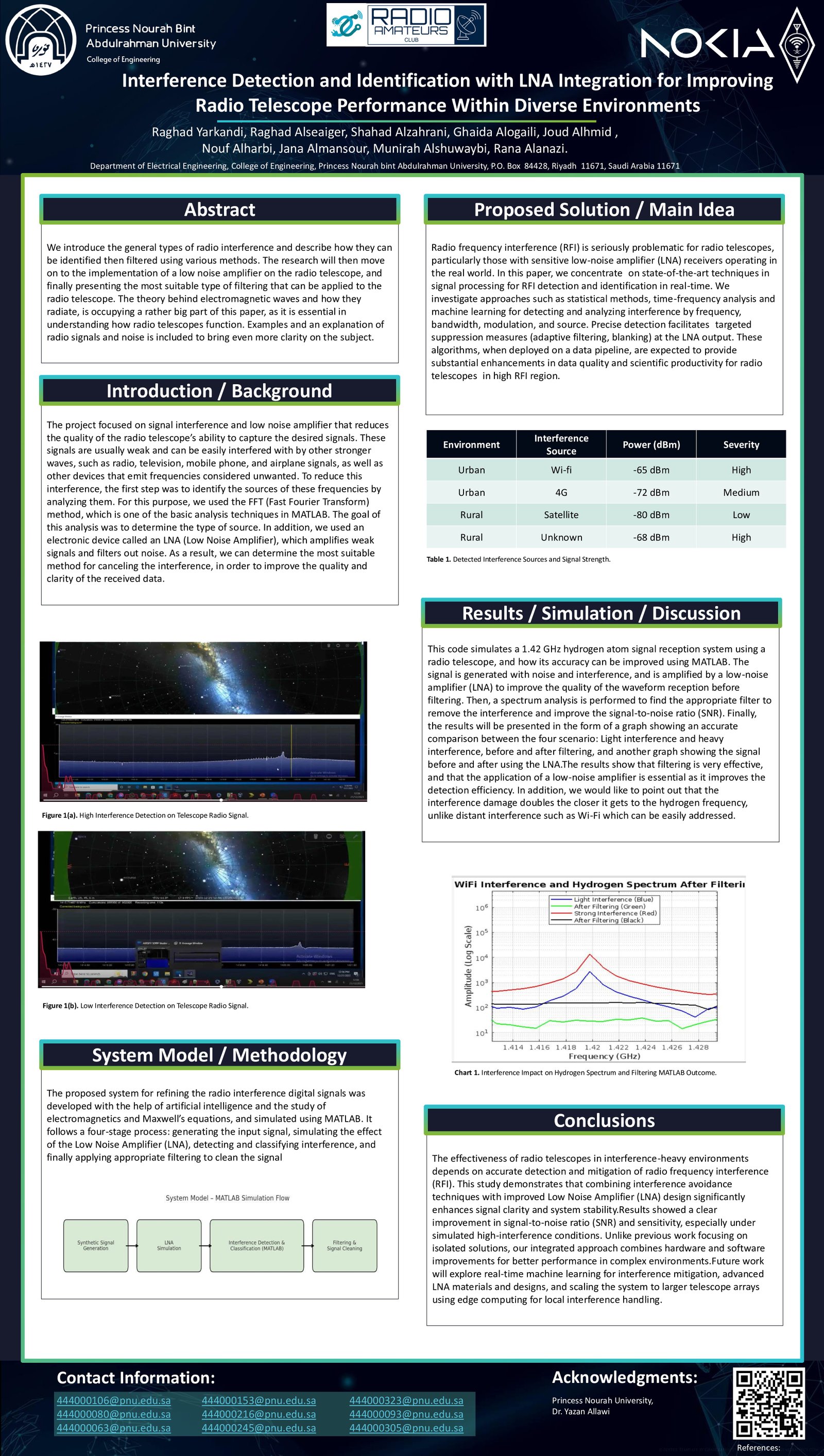
This project aims to reduce Radio Frequency Interference (RFI) in 1.42 GHz hydrogen line observations using LMS adaptive filtering implemented in MATLAB. Radio telescopes, particularly in urban environments, are exposed to interference from sources such as Wi-Fi networks, communication towers, and electronic devices, which reduces the signal-to-noise ratio and affects the quality of astronomical observations. The project uses a reference antenna to capture interference and a directional antenna to capture both the astronomical signal and interference, after which both signals are processed using an LMS filter to improve signal clarity.
01
The Beginning
How Did the Idea Begin?
The idea started from the need to improve the ability of radio telescopes to observe the 1.42 GHz hydrogen line in environments containing multiple sources of radio interference. Since interference affects the signal-to-noise ratio and makes hydrogen-line analysis less accurate, the project proposed using a reference antenna to capture environmental interference alongside a directional antenna, followed by the use of an adaptive LMS algorithm to estimate and remove the interference from the main signal.
02
The Idea
What Does the Project Offer?
The project provides an adaptive method for reducing radio-frequency interference from hydrogen-line observations. A reference antenna captures interference from the surrounding environment, while the directional antenna captures both the astronomical signal and interference. The two channels are then processed using an LMS filter in MATLAB, which learns the interference pattern and continuously updates its coefficients to subtract the interference from the main signal, improving the signal-to-noise ratio and making the astronomical signal clearer in both the time and frequency domains.
03
The Experience
From Concept to Prototype
The concept developed from identifying the problem of radio-frequency interference in hydrogen-line observations into a system consisting of a 5-meter parabolic dish with a main channel containing an LNA and SDR, along with an omnidirectional reference antenna connected to an LNA and RTL-SDR. Both signals are recorded simultaneously with time and frequency synchronization, after which the LMS algorithm is implemented in MATLAB to estimate and cancel the interference. The performance is evaluated by comparing the signal-to-noise ratio before and after filtering and analyzing the signals in both the time and frequency domains.
Project Team
Layan Almuhydeb
AlbatuI Alharthi
Rawan Albishri
Sara Bin Seadan
Diana Alwakaa
Renad Aljohani
Dalal Alshubily
Sadeem Almutairi
Project Supervisor
Project Photo Gallery
A visual tour documenting the manufacturing stages, laboratory testing, and live tracking experiments in the field.
Other Projects in This Edition
Explore the projects and experiments that shape the Electrospace experience.