LiRA-Align: A LIDAR-Based Real-Time Misalignment Detection System for Fixed Radio Telescopes
Develop your technical skills
Discover Electrospace
Share your idea
Develop your project
Explore the world of wireless communications
Be part of the tech community
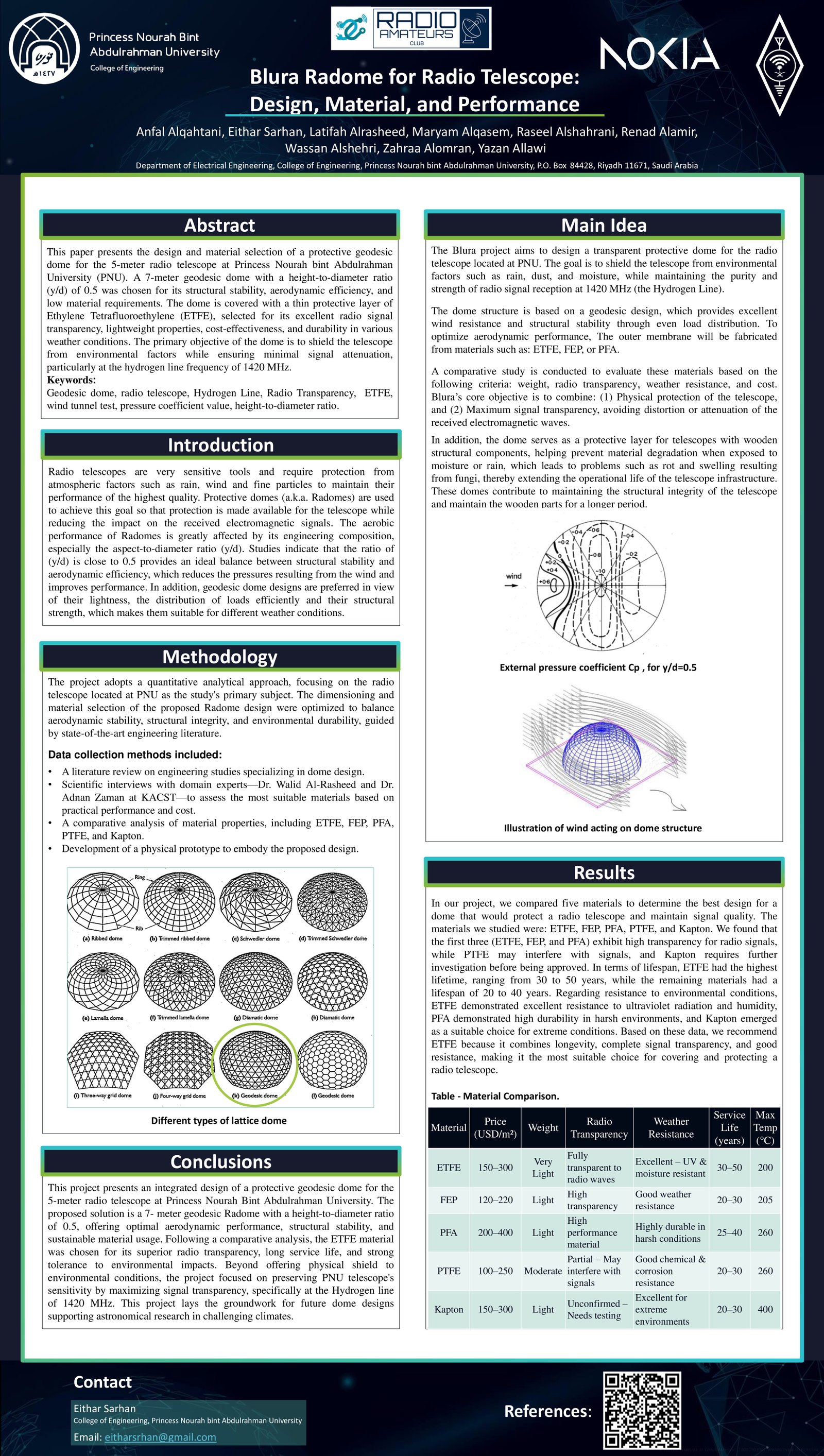
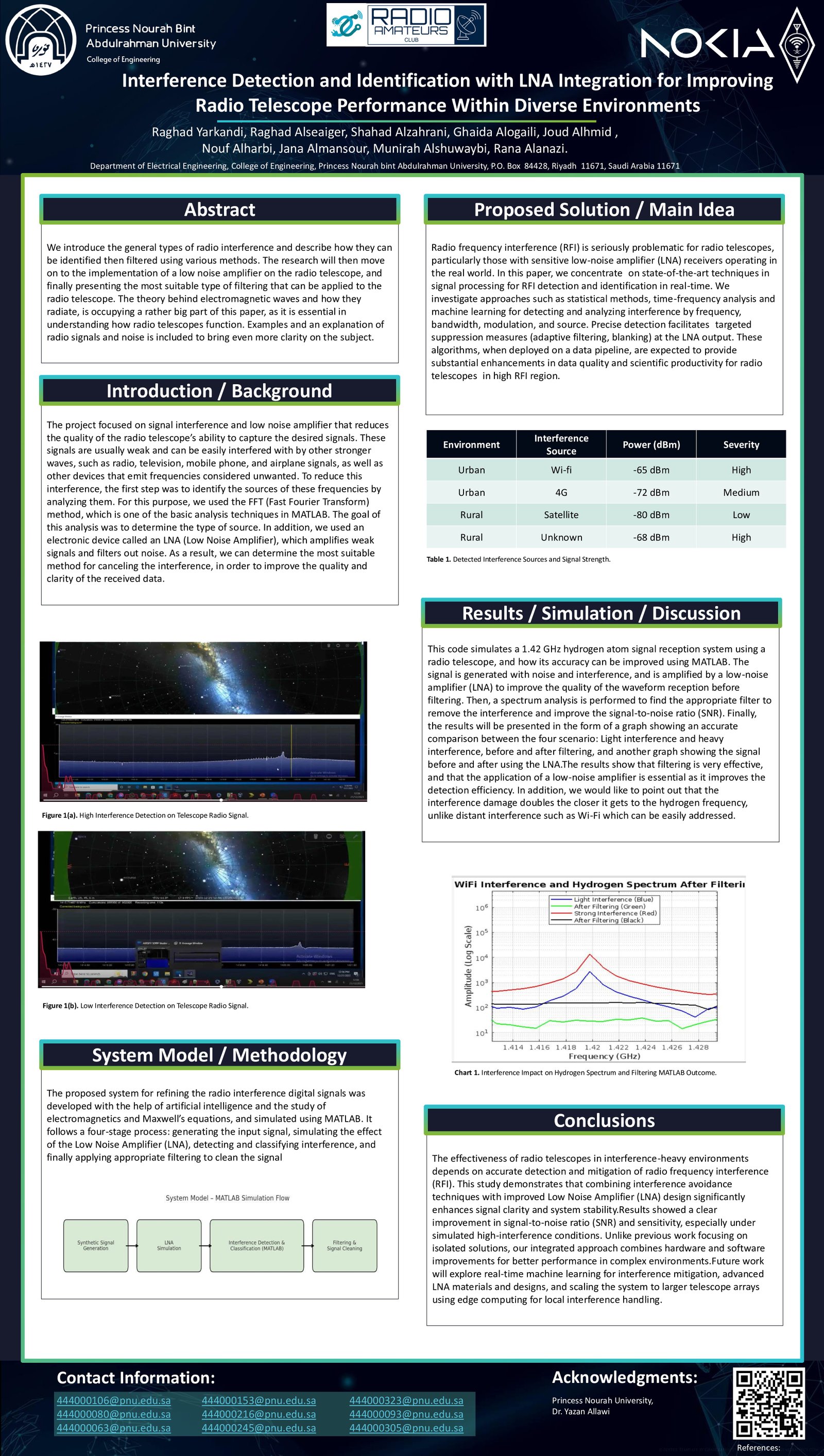
Project Idea
From an Idea to a Communication Experience
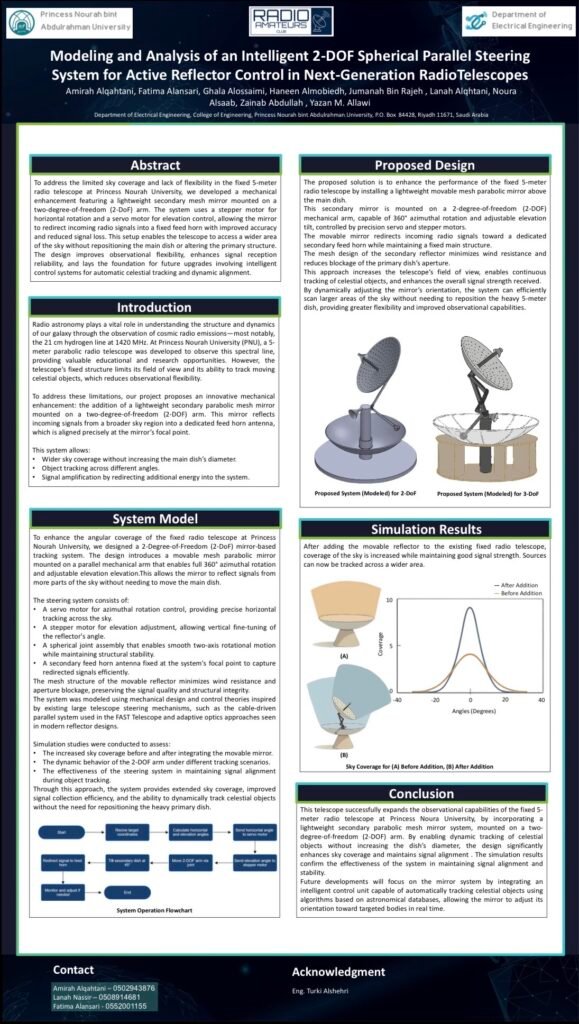
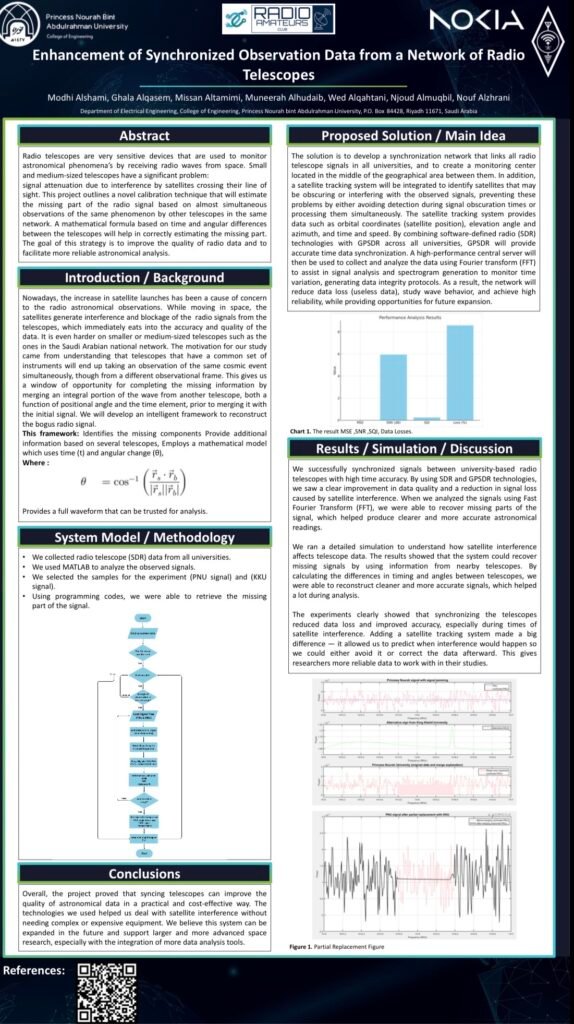
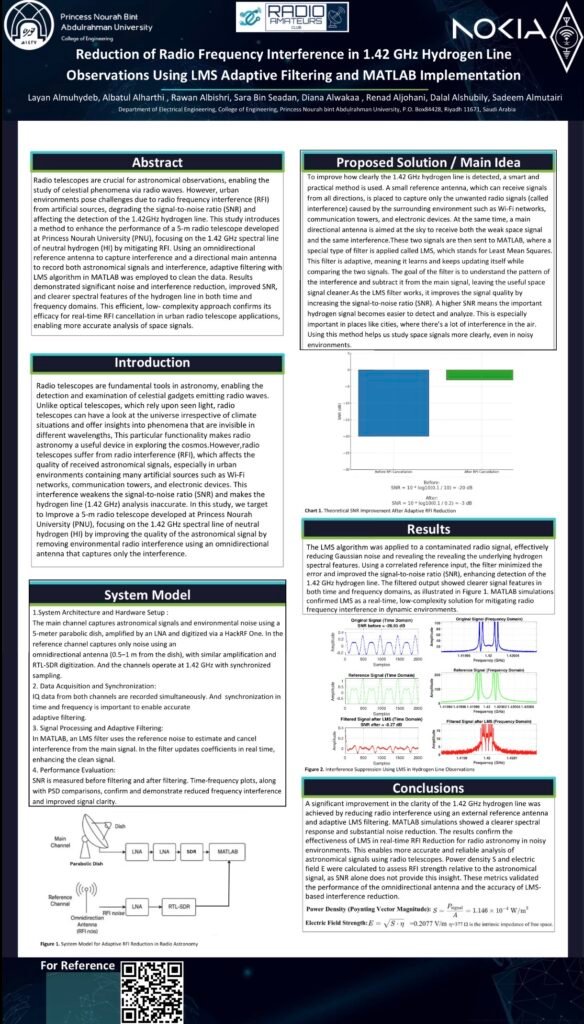
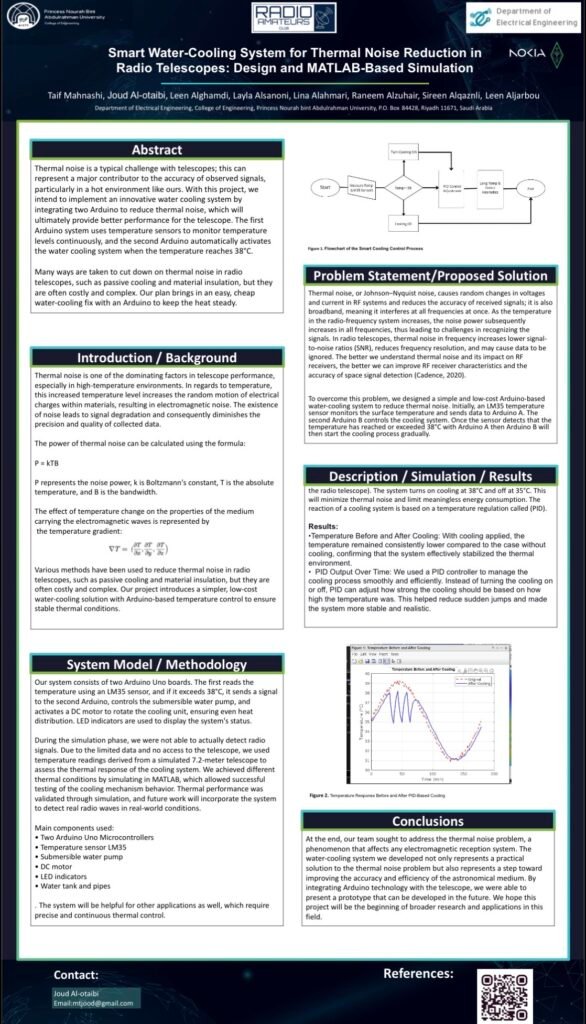
LiRA-Align is a compact and cost-effective LIDAR-based system designed to detect structural misalignment in fixed radio telescopes. The system continuously monitors the distance between a fixed LIDAR sensor and a reflective target mounted on the telescope to identify mechanical shifts or deviations caused by environmental or structural factors. The system was simulated using MATLAB to evaluate its ability to detect misalignment under both ideal and noisy conditions.
01
The Beginning
How Did the Idea Begin?
The idea started from the need to maintain precise alignment of structural components in radio telescopes, such as the feed and horn, since factors such as wind, temperature, and mechanical wear can cause small misalignments that affect signal accuracy. Since many traditional alignment systems rely on manual inspection or low-precision sensors and do not provide real-time responses, the project proposed using LIDAR to provide continuous and real-time alignment monitoring in a simple and cost-effective way.
02
The Idea
What Does the Project Offer?
The project provides a real-time structural alignment monitoring system using a LIDAR sensor to measure the distance between the sensor and a reflective target mounted on the telescope. When the measured distance exceeds a predefined threshold, the system generates an alert indicating misalignment. The system consists of a LIDAR sensor, a reflective target, a microcontroller, and an alert unit, providing a lightweight and low-cost approach for monitoring radio telescopes in educational observatories without requiring complex infrastructure.
03
The Experience
From Concept to Prototype
The concept developed from identifying the problem of structural misalignment in radio telescopes into a system based on continuous distance measurement using LIDAR. The system was then simulated in MATLAB by generating time-series data representing telescope movement with and without mechanical disturbances, adding Gaussian noise to represent realistic sensor conditions, and comparing the measurements against a baseline to identify when the misalignment threshold was exceeded. The results demonstrated that the system can detect deviations and maintain reliable sensitivity even under noisy conditions.
Project Team
Deemah Alshammari
Rahaf Almutairi
Sadeem Alyousef
Reem Alajraa
Rahaf AlQahtani
Arwa Aba Hussain
Joud Alhumaidi
Njood Alshalawi
Project Supervisor
Project Photo Gallery
A visual tour documenting the manufacturing stages, laboratory testing, and live tracking experiments in the field.
Other Projects in This Edition
Explore the projects and experiments that shape the Electrospace experience.