“An intelligent space-signal denoising system that combines Wavelet Transform with diffusion-based AI to recover weak astronomical signals while preserving their essential characteristics.”
The approach first uses the Wavelet Transform to analyze the signal and extract time-frequency features. Then, the diffusion-based AI model gradually removes noise while preserving the main structure of the original signal.
Develop your technical skills
Discover Electrospace
Share your idea
Develop your project
Explore the world of wireless communications
Be part of the tech community
Project Idea
From an Idea to a Communication Experience
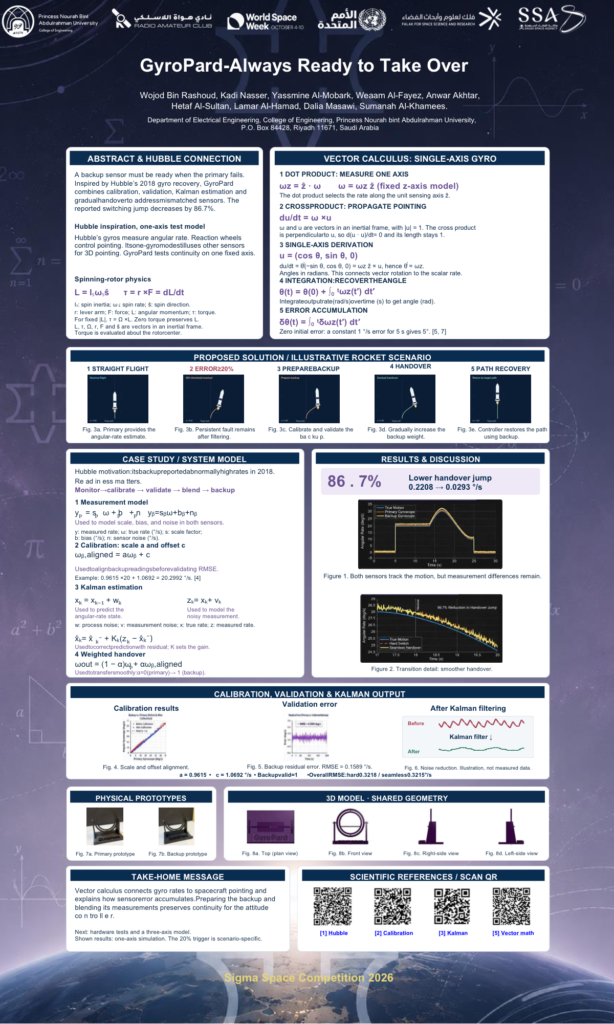
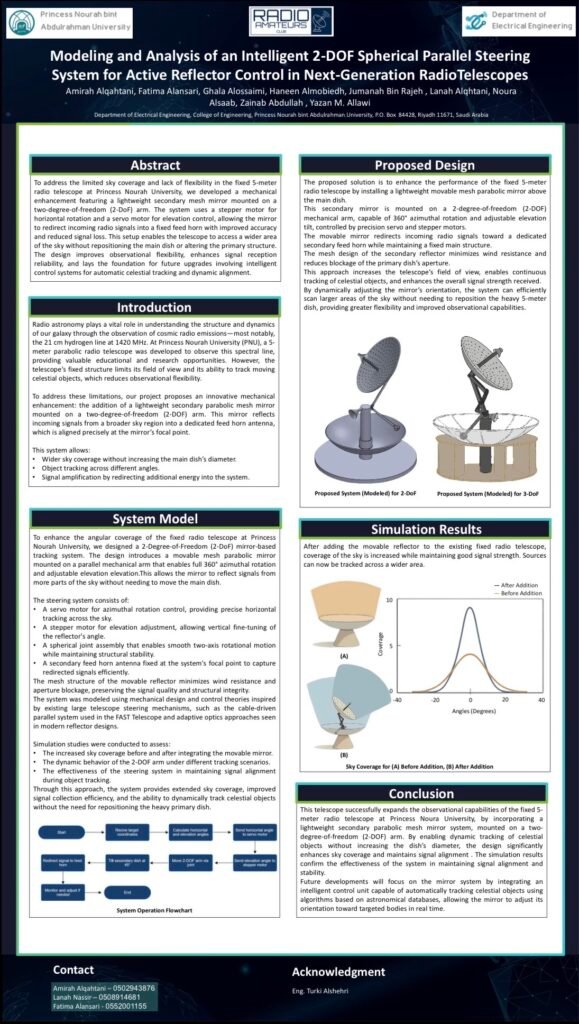
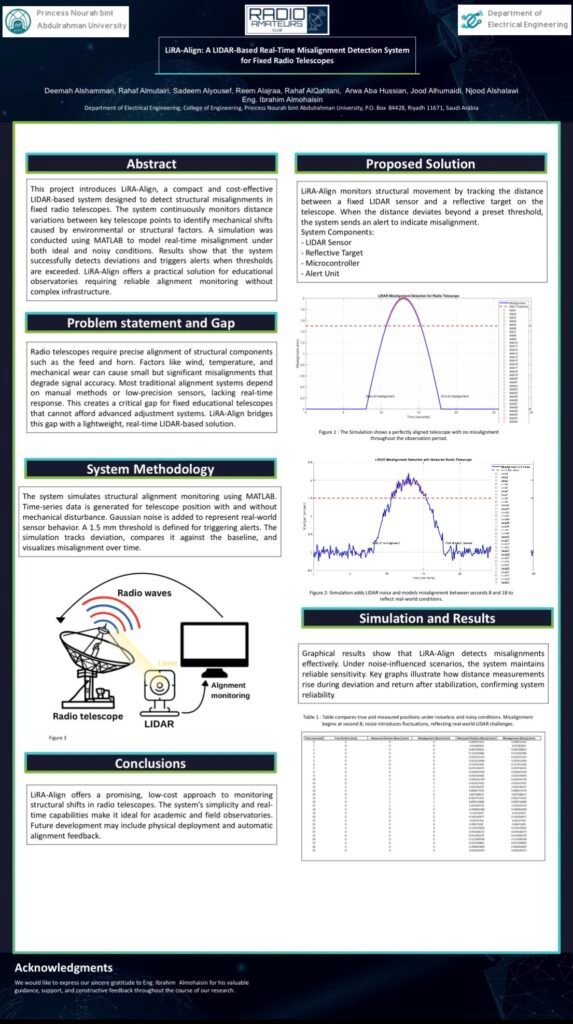
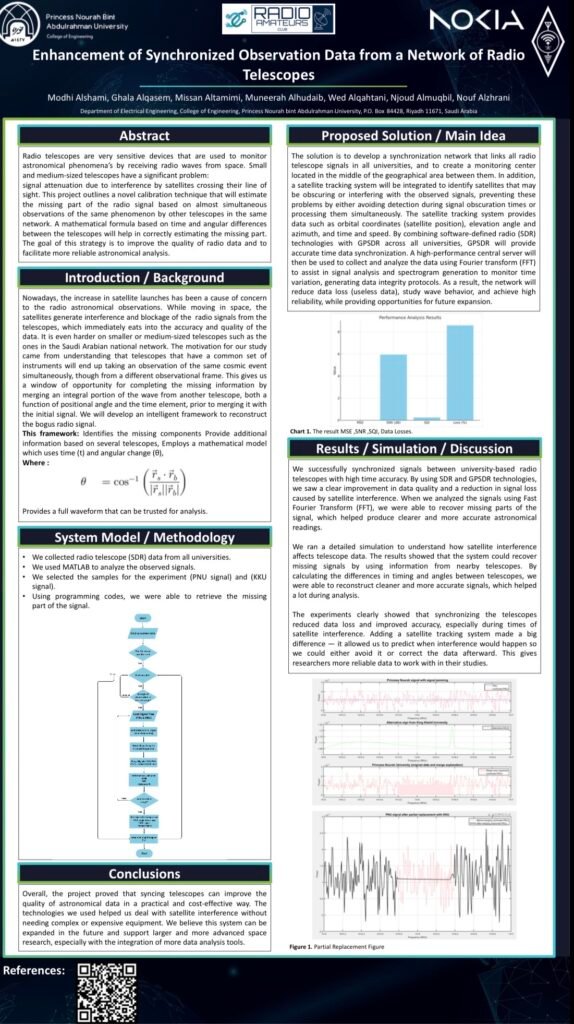
This project addresses the problem of noise and distortions in radio astronomy signals, which can make it difficult to detect weak astronomical signals and accurately identify celestial objects.
The project proposes an AI-based framework using Conditional Denoising Diffusion Probabilistic Models (DDPM) with a U-Net architecture to gradually reconstruct clean signals from noisy data while preserving their essential physical characteristics.
01
The Beginning
How Did the Idea Begin?
02
The Idea
What Does the Project Offer?
The project provides an intelligent approach for improving weak space signals affected by noise by combining:
* Wavelet Transform to analyze signals and extract time-frequency features.
* Diffusion-based AI to gradually remove noise.
* Preservation of the main signal structure during denoising.
* Improved clarity of weak astronomical signals.
* Support for applications such as pulsar detection and solar activity analysis.
* Performance evaluation using SNR and MSE. Group_15 AI-based denoising 4.pdf
The results show that the proposed method improves signal reconstruction and reduces background noise compared with raw signals and traditional filtering methods.
03
The Experience
From Concept to Prototype
Project Team
Alreem Alqasim
Fatimah Aldosari
Ghaida Bader
Najd Bin Kahter
Raghad Alzahrani
Rahaf Alzahrani
Rayhana Alalawi
Project Supervisor
Project Photo Gallery
A visual tour documenting the manufacturing stages, laboratory testing, and live tracking experiments in the field.
Other Projects in This Edition
Explore the projects and experiments that shape the Electrospace experience.